Glock 19 vs SIG P320: Durability Analysis of MIM vs Machined Internal Parts


When choosing a reliable handgun, durability ranks high on the list of priorities for many gun owners. The Glock 19 and the SIG Sauer P320 stand out as two of the most popular pistols on the market today. Both have earned solid reputations, but their internal construction differs significantly, especially when it comes to the materials and manufacturing processes used for internal parts. This head to head comparison focuses on the durability of Metal Injection Molding (MIM) parts versus machined parts inside these firearms.
I’ve spent time examining both pistols closely, and I want to share what I’ve learned about how these manufacturing choices affect long-term performance and reliability.
Understanding MIM and Machined Parts
Before diving into the comparison, it helps to understand what MIM and machined parts are.
Metal Injection Molding (MIM)
MIM is a manufacturing process where metal powder is mixed with a binder, injected into a mold, and then sintered (heated) to fuse the metal particles. This allows complex shapes to be produced quickly and at a lower cost than machining. MIM parts are common in modern firearms because they reduce production time and cost.
Machined Parts
Machined parts start as solid metal blocks or bars. They are cut, drilled, and shaped using CNC machines or manual tools to precise dimensions. Machining is more labor-intensive and expensive but produces parts with excellent strength and consistency.
Both methods have pros and cons, but the key question is how they hold up inside a firearm under repeated use.
Glock 19 Internal Parts: MIM Focus
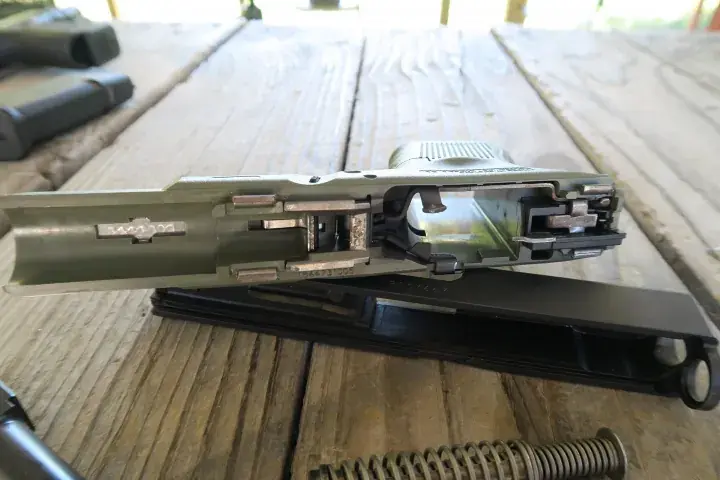
Glock has long been known for using MIM parts extensively in their pistols, including the Glock 19. Many of the internal components such as the trigger bar, ejector, and locking block are made using MIM.
Advantages of Glock’s Use of MIM
Cost Efficiency
Glock’s use of MIM parts helps keep the pistol affordable without sacrificing overall quality.
Complex Shapes
MIM allows Glock to produce intricate parts that would be difficult or expensive to machine.
Consistent Production
The injection molding process ensures uniformity across batches.
Durability of Glock’s MIM Parts
Glock’s MIM parts have proven durable in real-world use. For example, the trigger bar and ejector withstand thousands of rounds without failure in most cases. The sintering process creates a dense metal structure that resists wear well.
That said, MIM parts can be more brittle than machined parts. Under extreme stress or abuse, some users report occasional cracking or chipping, especially if the pistol is not properly maintained.
Glock’s Approach to Durability
Glock compensates for any potential MIM weaknesses by using high-quality steel powders and heat treatments. The company also designs parts with sufficient thickness and reinforcement to handle stress.
SIG Sauer P320 Internal Parts: Machined Components

The SIG Sauer P320 takes a different approach. Many of its critical internal parts, such as the trigger mechanism and sear, are machined from solid steel.
Advantages of Machined Parts in the P320
Strength and Toughness
Machined parts generally have higher tensile strength and toughness compared to MIM parts.
Precision Fit
Machining allows for very tight tolerances, which can improve trigger feel and reliability.
Resistance to Stress
Machined parts handle impact and wear better under heavy use.
Durability of SIG Sauer’s Machined Parts
In my experience and from user reports, the P320’s machined parts hold up extremely well even after tens of thousands of rounds. The solid steel construction resists deformation and cracking better than MIM in high-stress areas.
SIG Sauer also applies advanced heat treatments and coatings to enhance wear resistance and corrosion protection.
Head to Head Comparison: Durability in Practice
When comparing the Glock 19 and SIG P320 internal parts durability, several factors come into play.

Examples from Field Use
Glock 19
Law enforcement agencies and civilian users report Glock 19 MIM parts lasting well beyond 20,000 rounds with routine cleaning and maintenance. Failures are rare but can occur if the pistol is subjected to extreme conditions or neglect.
SIG P320
The P320’s machined parts have shown exceptional durability in military and law enforcement trials. Some users report over 50,000 rounds fired with no internal part failures.
What This Means for Buyers
If you are deciding between the Glock 19 and SIG Sauer P320, understanding the internal parts construction helps clarify what you get for your money.
Budget and Maintenance
Glock offers a reliable pistol with durable MIM parts at a lower price point. Regular maintenance is key to maximizing part life.
Long-Term Durability
The SIG P320’s machined parts provide extra toughness and may appeal to users who prioritize longevity and are willing to invest more upfront.
Use Case
For everyday carry, home defense, or moderate range use, Glock’s MIM parts perform admirably. For heavy-duty use, competition, or military applications, the P320’s machined parts offer an edge.
Final Thoughts on Glock 19 vs SIG P320 Durability
The Glock 19 and SIG Sauer P320 both deliver strong performance, but their internal parts tell different stories about durability. Glock’s MIM parts provide excellent value and reliable service life when cared for properly. SIG’s machined parts offer superior toughness and wear resistance, making them ideal for users who demand maximum durability.
Choosing between these pistols comes down to your priorities: cost and proven reliability with Glock, or premium internal construction with SIG Sauer. Either way, understanding the differences in internal parts quality helps you make a more informed decision.


Comments