FRT Triggers Legality Explained: Understanding the DOJ Settlement and 5th Circuit Ruling
- Roland Lamothe
- May 31
- 4 min read

The legal status of FRT triggers has been a hot topic in gun law discussions across the United States. Recently, the Department of Justice (DOJ) settled with Rare Breed, returning 12,000 FRT triggers, and the 5th Circuit Court confirmed their legality. This development has sparked widespread interest and questions about what this means for gun owners, manufacturers, and regulators. This post breaks down the key points of the DOJ settlement and the 5th Circuit ruling, explaining why FRT triggers are federally legal and what that means for the future.

What Are FRT Triggers?
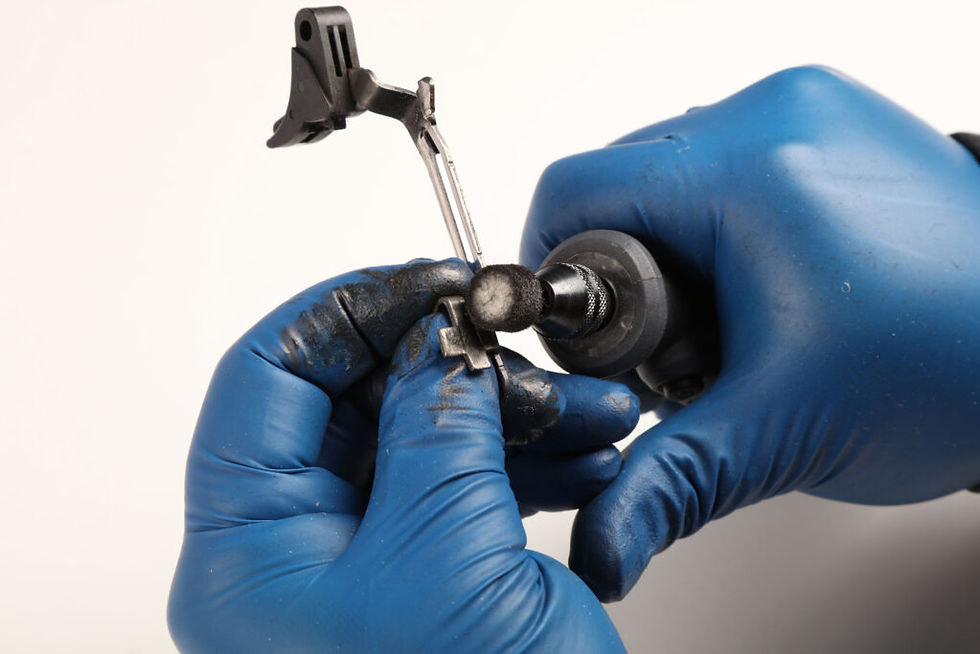
FRT stands for Forced Reset Trigger. These triggers are designed to reset faster than traditional triggers, allowing for quicker follow-up shots without the need for a full trigger release. They do not convert a semi-automatic firearm into a fully automatic one, but they do change the trigger’s reset behavior.
Understanding this distinction is crucial because federal law strictly regulates fully automatic weapons, but semi-automatic firearms with modified triggers like FRTs have been a gray area until recent clarifications.
Background of the DOJ Settlement with Rare Breed
Rare Breed Arms, a manufacturer of FRT triggers, faced legal challenges when the Bureau of Alcohol, Tobacco, Firearms and Explosives (ATF) initially classified their triggers as machine guns. This classification would have made the triggers illegal under federal law without special licensing.
After legal battles, the DOJ agreed to settle with Rare Breed. As part of the settlement, the DOJ returned approximately 12,000 FRT triggers that had been seized. This move signaled a shift in the federal government’s stance on these devices.
The 5th Circuit Court Ruling
The 5th Circuit Court of Appeals played a pivotal role in confirming the legality of FRT triggers. The court ruled that FRT triggers do not meet the legal definition of a machine gun under federal law because they do not fire more than one round per single function of the trigger.
This ruling clarified that the rapid reset feature does not equate to automatic fire. The court’s decision has set a precedent that affects not only Rare Breed but also other manufacturers and owners of FRT triggers.
Why FRT Triggers Are Federally Legal
The key legal point is how federal law defines a machine gun. According to the Gun Control Act and the National Firearms Act, a machine gun fires multiple rounds with a single pull of the trigger. FRT triggers require a separate pull for each shot, even if the reset happens quickly.
This means:
Each round fired corresponds to a distinct trigger function.
The trigger’s forced reset does not cause continuous fire.
FRT triggers comply with the letter of federal law.
This interpretation aligns with the 5th Circuit’s ruling and the DOJ’s settlement, confirming that FRT triggers are legal at the federal level.
What This Means for Gun Owners and Manufacturers
For gun owners, the ruling and settlement mean they can legally purchase, own, and use FRT triggers without fear of federal prosecution, provided they comply with other applicable laws.
Manufacturers can continue producing and selling FRT triggers, knowing that the federal government recognizes their legality. This clarity encourages innovation and competition in the firearms accessory market.
However, it is important to note:
State and local laws may vary. Some jurisdictions might have restrictions on FRT triggers.
Owners should stay informed about their local regulations.
Compliance with all firearm laws remains essential.

Common Questions About FRT Triggers
Are FRT triggers considered machine guns?
No. The 5th Circuit ruling and DOJ settlement confirm that FRT triggers do not meet the legal definition of machine guns because they require a separate trigger function for each shot.
Can I install an FRT trigger on any semi-automatic rifle?
While federally legal, installation depends on the firearm model and compatibility. Always check manufacturer guidelines and local laws before modification.
Do FRT triggers increase the rate of fire to automatic levels?
No. They allow faster trigger reset but still require a distinct trigger pull for each shot.
Are there any risks in using FRT triggers?
Users should be trained to handle firearms safely. Faster trigger resets can lead to faster shooting, which requires responsible handling to avoid accidents.
Impact on Gun Law Discussions
The DOJ settlement and 5th Circuit ruling have influenced ongoing debates about firearm accessories and regulations. They highlight the importance of clear legal definitions and the role of courts in interpreting complex firearm laws.
This case also shows how legal challenges can shape the market and regulatory environment, affecting manufacturers, retailers, and consumers.
Staying Updated on Gun Law Changes
Gun laws can change at any time, especially with evolving technology and political climates. To stay informed:
Follow official government announcements.
Consult legal experts specializing in firearms law.
Join reputable gun owner associations for updates and advocacy.
Understanding the current legal landscape helps gun owners make informed decisions and avoid legal pitfalls.
Summary
The DOJ’s settlement with Rare Breed and the 5th Circuit Court’s ruling have confirmed that FRT triggers are federally legal. These triggers do not qualify as machine guns because they require a separate trigger function for each shot. This clarity benefits gun owners and manufacturers by providing legal certainty.
If you are considering purchasing or using an FRT trigger, make sure to check your state and local laws. Stay informed and handle firearms responsibly to ensure safety and compliance.


Comments